Do chickens get cold in winter? It is one of the most common worries for keepers when the first frost arrives, and the reassuring answer is that healthy, fully feathered hens are remarkably well equipped to stay warm in winter. Chickens have evolved a clever set of tricks to thermoregulate, from fluffing their feathers to huddling together on the roost. In this guide we explain exactly how chickens stay warm, what temperatures they can tolerate, the signs of cold stress to watch for, and the simple things you can do to help your flock thrive through the coldest months.
Short answer: Chickens stay warm in winter by trapping a layer of air in their down feathers, fluffing up to boost that insulation, tucking their head and feet into their feathers, and roosting close together to share body heat. Most cold-hardy breeds cope comfortably with temperatures around and below freezing, provided their coop is dry, draught-free and well ventilated, with unfrozen water always available.

Do Chickens Get Cold in Winter?
Chickens feel the cold far less than we tend to imagine. A hen runs a body temperature of around 40–42°C and is wrapped in a dense, layered coat of feathers that is one of nature’s best insulators. Most healthy adult hens of cold-hardy breeds are comfortable down to freezing and a fair way below it. The bigger risks in winter are usually damp, draughts and frozen water rather than cold air alone – which is why how you set up the coop matters far more than the temperature on the thermometer.
How Do Chickens Stay Warm in Winter?
Chickens use several overlapping strategies to keep their body heat in. Understanding them helps you see when your flock is coping well and when it might need a hand.
Down feathers trap a layer of warm air
Chickens have several different types of feathers. The soft down and semiplume feathers closest to the skin are natural insulators: they trap a layer of air next to the body, and that still air acts as a buffer that stops the heat the chicken generates from escaping.

Chickens actually produce a surprising amount of heat. If you have ever seen a lorry transporting a large number of chickens, you will have noticed it is always open-sided – if they were closed in, they would overheat very quickly. That natural warmth, held in by their feathers, is what keeps them snug on a frosty night.
Contour feathers shield against wind and rain
The larger outer contour feathers form a weatherproof shield. They reduce the amount of wind that can reach the skin and keep rain off, helping the insulating down underneath stay dry. Dry feathers are warm feathers, which is exactly why a hen that gets soaked and chilled is far more vulnerable than one that simply feels cold air.

Fluffing up to boost insulation
On cold days you will see chickens fluff their feathers right up, turning themselves into round little balls. This lifts the feathers and traps even more air for extra insulation – very similar to the way the hairs on our arms stand on end and give us goosebumps when we are cold. A hen that is fluffed up and content is simply doing her job of staying warm.

This is also why chicken jumpers, as cute as they look, are not recommended for fully feathered birds. By flattening the feathers they actually stop a hen from fluffing up, which can cause her to lose heat rather than keep it in.

Tucking in the head and feet
Chickens will often tuck their face and beak under a wing and settle down so that their feathered body covers their feet. It looks uncomfortable to us, but it shelters the parts of the body that lose heat fastest. A clever bit of internal plumbing helps here too: the blood vessels in a chicken’s legs and feet sit close together and exchange heat, so warm blood heading down to the feet pre-warms the cold blood coming back up. This keeps heat loss through their bare legs and feet to a minimum.

Roosting together to share body heat
Chickens also huddle together for warmth, either side by side on a perch or in a cosy cluster. This shared body heat benefits the whole group, and it works best when the coop is the right size: snug enough for the birds to warm the space, but never overcrowded. A coop that is far too large for the flock is harder for them to keep warm. If you are unsure about sizing, our guides on how big a chicken coop should be and what size chicken coop you need will help you get it right.
How Cold Can Chickens Tolerate?
There is no single magic number, because it depends on the breed, the bird’s age and health, and above all the conditions inside the coop. As a general guide, healthy adult hens of cold-hardy breeds cope well at and below freezing, and many happily potter about in light snow. Large-combed breeds are a little more prone to frostbite on their combs and wattles in very harsh, damp cold, while small bantams and very young or unwell birds feel extremes more keenly.
What turns ordinary cold into a genuine problem is almost always moisture and wind. A dry, draught-free, well-ventilated coop lets chickens use all their natural defences. A damp, draughty or, paradoxically, a sealed-up airless coop does the opposite – trapped humidity is what leads to frostbite and chills.
Signs of Cold Stress in Chickens
Most of the time your flock will be absolutely fine, but it is worth knowing the signs that a bird is genuinely too cold rather than just fluffed up and cosy. Keep an eye out for:
- Persistent shivering or a hunched, miserable posture that does not ease.
- Lethargy, reluctance to move, or a bird sitting alone away from the group.
- Pale, grey, or blackened tips on the comb or wattles, which can indicate frostbite.
- Cold, stiff feet, or a bird that will not perch.
- Loss of appetite or a noticeable drop in activity.
If you spot these signs, move the bird somewhere dry and sheltered and check the coop for damp and draughts. For anything that looks like illness, frostbite injury, or a bird that does not recover quickly, always consult your vet or a qualified poultry specialist rather than treating it yourself.
How to Help Your Chickens Stay Warm in Winter
Your job is not to heat the coop – it is to give your hens the dry, draught-free conditions that let their own brilliant insulation do the work. A few sensible basics make all the difference.
Keep the coop dry and draught-free, but well ventilated
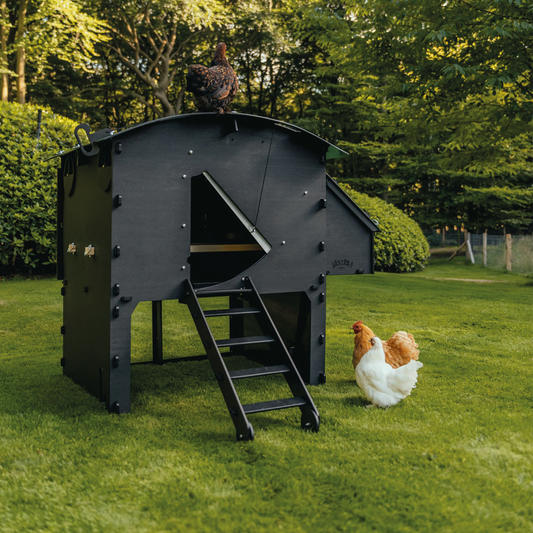
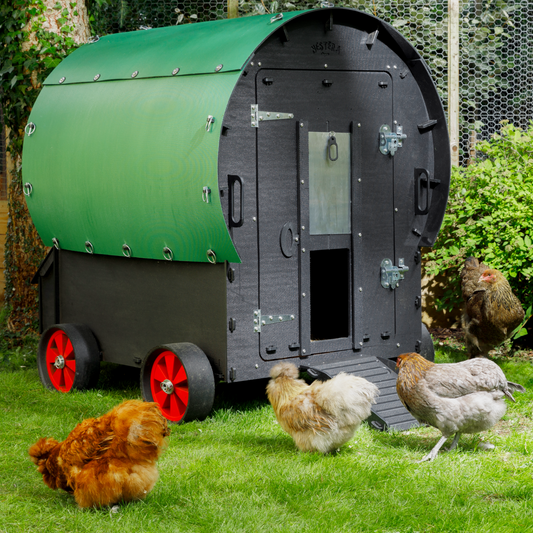
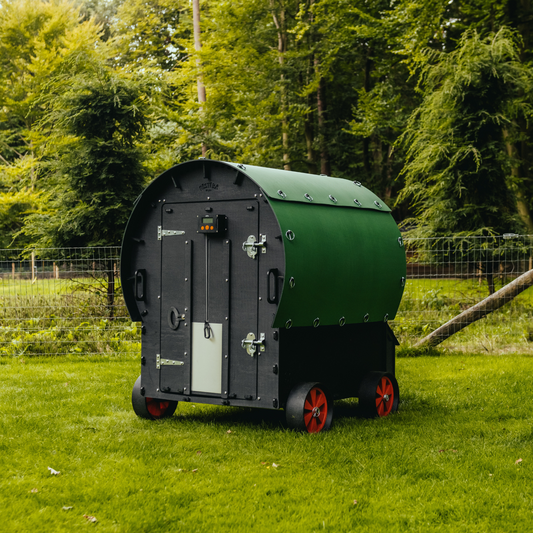
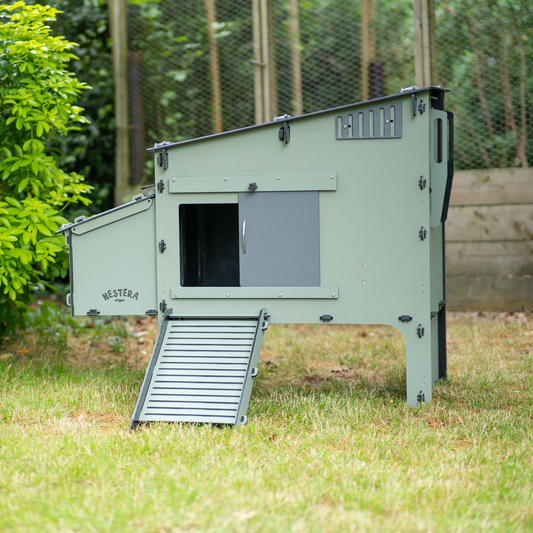
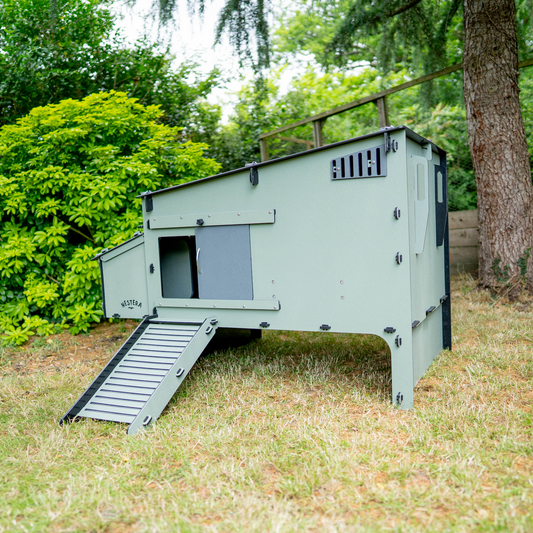
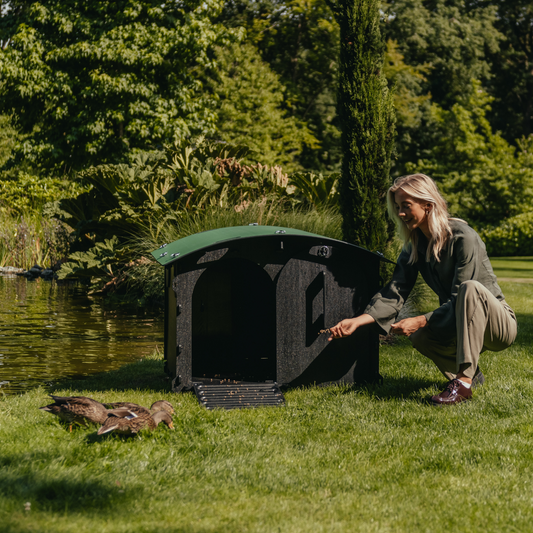
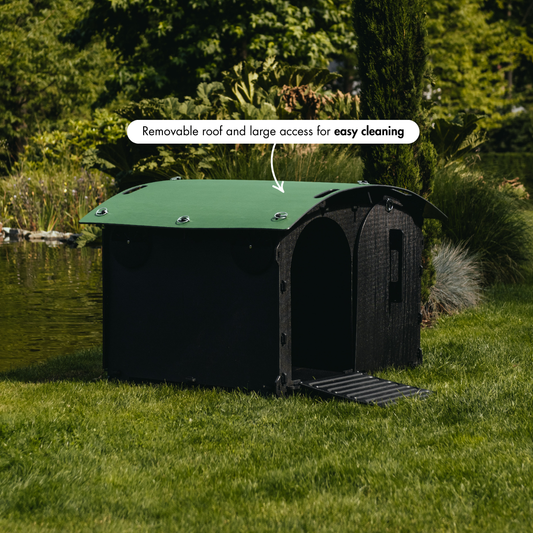
This is the single most important thing. Chickens handle cold air well but cope badly with damp and draughts. You want a coop that blocks gusts of wind at roost height while still allowing moist air and ammonia to escape through ventilation higher up. Smooth, non-porous surfaces help, because they do not soak up moisture the way timber does. Our raised, well-insulated recycled-plastic chicken coops are designed to stay dry and draught-free, with ventilation that clears damp air without chilling the birds.
Use plenty of good, dry bedding
A generous layer of dry bedding insulates the floor and gives hens somewhere snug to settle. Keep it dry and refresh it before it gets damp, as wet bedding quickly chills a coop and raises humidity. If you are weighing up your options, see our guide to the best bedding for chicken coops.

Feed for warmth and keep water unfrozen
Chickens often eat more in cold weather to power their internal ‘boilers’. Although hens frequently slow or stop laying at this time of year, they still benefit from a few extra treats – a handful of high-calorie seeds or scratch grains in the afternoon helps fuel the overnight heat they generate to stay snug until morning. For more ideas, see our guide to what chickens can eat in winter.
Water matters just as much. Even in the cold, chickens drink a fair amount of fresh water to stay hydrated, so make sure they always have access to water that has not frozen over. Our guide on how to prevent your poultry drinkers from freezing in winter covers some simple, practical ways to keep it flowing.

Frequently Asked Questions
Do chickens get cold in winter?
Healthy, fully feathered hens rarely get cold from low temperatures alone. Their down feathers, fluffing behaviour and habit of roosting together keep them warm. The real dangers are damp, draughts and frozen water, so a dry, draught-free coop matters more than the air temperature.
What temperature is too cold for chickens?
Most cold-hardy adult hens are comfortable at and below freezing. Birds can struggle in prolonged hard frost combined with damp or wind, and large-combed breeds are more prone to frostbite in those conditions. Young, elderly or unwell birds feel extremes more, so keep a closer eye on them.
Do chickens need a heater in the coop?
In most temperate climates, no. Chickens are built to keep themselves warm, and a heat lamp can actually be risky – it is a fire hazard and stops birds acclimatising to the cold. Focus on a dry, draught-free, well-ventilated coop with deep dry bedding instead.
How do I know if my chickens are too cold?
Look for persistent shivering, a hunched posture that does not ease, lethargy, a bird sitting apart from the flock, or pale or blackened comb tips. If you see signs of frostbite or illness, speak to your vet or a qualified poultry specialist.
Give Your Flock a Warm, Dry Home This Winter
Chickens are wonderfully well adapted to the cold – your role is simply to keep their home dry, draught-free and well ventilated so their natural insulation can do its job. A raised, easy-clean coop makes that far simpler: smooth recycled-plastic surfaces stay dry, leave no cracks for red mites to hide in, and ventilate without chilling the birds. Explore our recycled-plastic chicken coops to give your hens a snug, healthy home to see them comfortably through winter and every season after.